



Nitrates in Drinking Water: Hidden Threats to Health and How to Protect Your Family
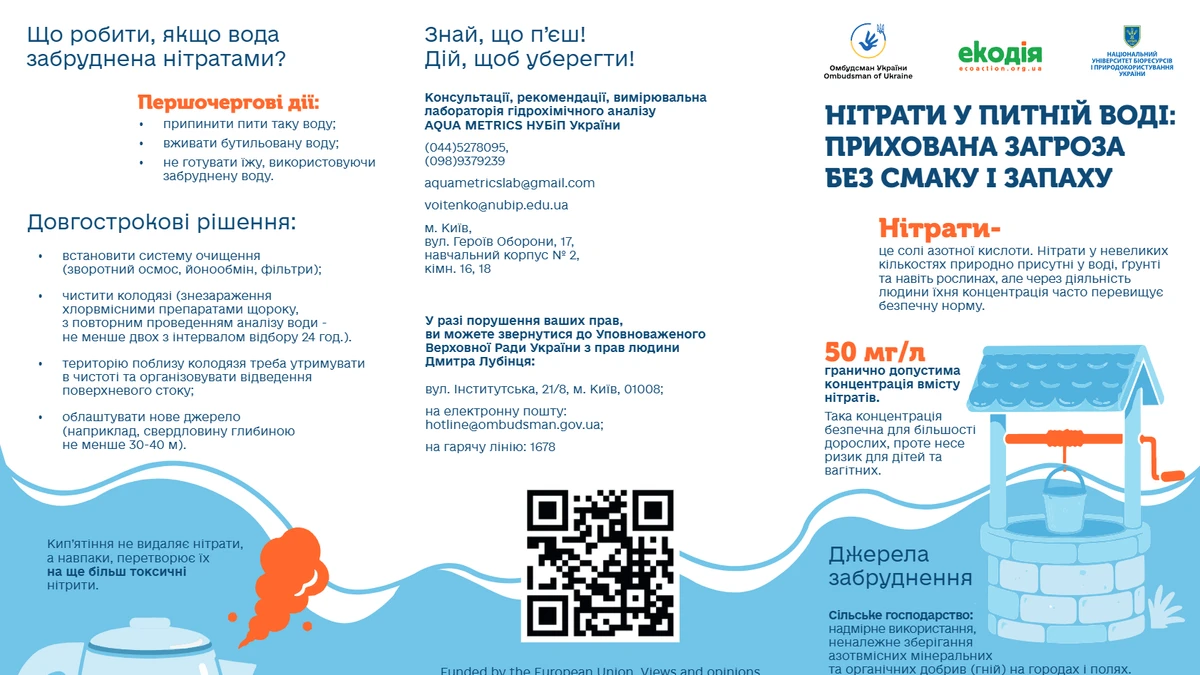
Access to clean and safe drinking water is a fundamental human right. However, according to monitoring data from the Secretariat of the Ukrainian Parliament Commissioner for Human Rights, the National University of Life and Environmental Sciences of Ukraine (NULES), and the NGO "Ecoaction", over 75% of Ukraine's rural population relies on private wells and decentralized groundwater sources, where the risk of nitrate pollution is at its peak.
Nitrates are odorless, colorless, and tasteless chemical compounds. They cannot be detected without specialized laboratory testing. The maximum allowable concentration (MAC) in drinking water is 50 mg/L. Common sources of contamination include excessive agricultural fertilizers, livestock manure, and unsealed cesspools or septic tanks situated closer than 20 meters to the water intake.
Health Hazards and Vulnerable Populations
Once ingested, nitrates oxidize iron in hemoglobin to form methemoglobin, severely hindering blood's ability to transport oxygen throughout the body. This causes systemic tissue hypoxia.
- Infantile Methemoglobinemia ("Blue Baby Syndrome"): Infants fed formula mixed with nitrate-rich well water are at grave risk. Key signs include perioral and peripheral cyanosis (bluish skin tint), shortness of breath, lethargy, vomiting, and tachycardia.
- High-risk groups: Formula-fed newborns, pregnant women, elderly individuals, and people suffering from cardiovascular disorders.
- Long-term exposure: Chronic ingestion leads to renal and hepatic impairment, gastrointestinal issues, and delayed physiological development in growing children.
Immediate Actions and Long-Term Solutions
- Stop drinking and cooking with contaminated water immediately. Switch to certified bottled water for all nutritional and cooking needs.
- CRITICAL: Boiling water DOES NOT remove nitrates! Water evaporation actually increases the nitrate concentration and may convert nitrates into far more toxic nitrites.
- Nitrate-contaminated water remains safe for personal hygiene: showering, washing hands, laundry, and garden irrigation.
- Long-term remedies: Install reverse osmosis filtration or specialized ion-exchange systems, conduct annual well sanitation, or drill deep artesian boreholes (30–40+ meters).