



Adhering to a Gender-Sensitive Approach When Communicating with Survivors
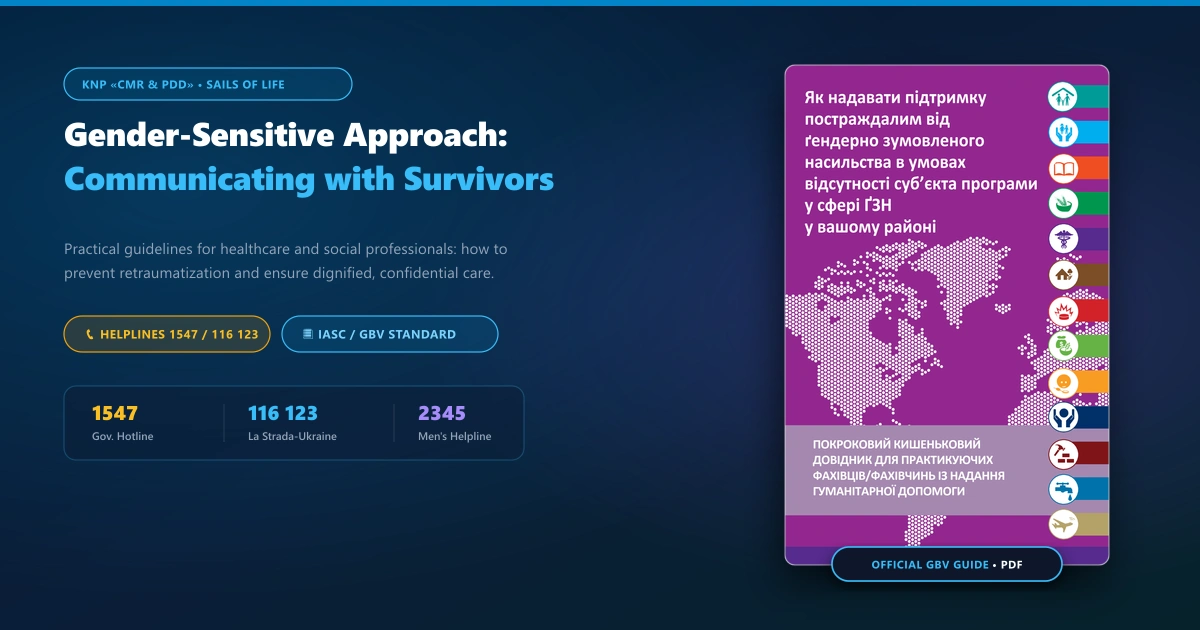
Why Does a Gender-Sensitive Approach Prevent Retraumatization?
A gender-sensitive approach when communicating with survivors is a professional tool that significantly reduces the risk of secondary trauma and fosters a safe, supportive environment for care. Conflict-Related Sexual Violence (CRSV) is never about sex or desire—it is an assertion of power, humiliation, and aggression. Anyone can be affected regardless of age or gender; however, due to deeply rooted social stereotypes and roles, women, men, and children experience and cope with this trauma differently.
Interacting with Female Survivors
- Acknowledge Diverse Responses: Every woman copes with trauma differently. Never expect stereotypical behavior such as passivity, tears, or weakness—any emotional response is a normal reaction to abnormal circumstances.
- Provide Choice Regarding Specialist's Gender: Do not automatically assume that a woman is only comfortable speaking with a female professional. Always ask directly: "Would you feel more comfortable speaking with a male or female specialist?"
- Strict Confidentiality and Safety: Women frequently face a high risk of social stigma and judgment. Always explicitly explain how information will be handled and documented, and obtain informed consent at every stage.
- Consider Caregiving Responsibilities: Women often carry the responsibility of caring for children or elderly relatives. Coordinate the time and location of consultations so that it does not create additional hardship for them.
Communicating with Male Survivors: Breaking Taboos
- Dismantling Myths: Society often harbors damaging stereotypes that men "are invulnerable and cannot be victims." Remember: violence is solely an act of perpetrator aggression, and anyone can be targeted.
- Allowing More Time to Build Trust: Men report violence much less frequently due to stigma, shame, and a perceived loss of dignity. Never rush the conversation or demand graphic details.
- Recognizing Indirect Symptoms: Non-specific indicators—such as chronic lower back pain, unexplained somatic complaints, sexual dysfunction, depression, or severe anxiety following detention or captivity—can be signs of surviving violence.
- Referral to Specialized Support: Verify in advance which partner organizations and professionals have certified expertise in supporting male survivors.
Protecting and Supporting Children
Conversations with children regarding incidents of violence must be conducted exclusively by professionals who have undergone specialized training, and only when strictly necessary to avoid causing further harm. Crucially, children who have witnessed violence against loved ones are always considered direct victims and require immediate psychological safeguarding.